Best 12 Product Roadmap Tools For SaaS Teams In 2026
Trying to pick a roadmap tool for your SaaS team? We compared 12 of them, with real pricing and what each one does best.

TL;DR
- Every tool here has product roadmapping as a core feature, and general project management apps aren't on the list.
- Starting prices run from free plans (Productboard, Featurebase, Canny, Jira Product Discovery, Visor) to $59 per user per month (Aha! Roadmaps) to custom, sales-led quotes (airfocus, ProductPlan, Dragonboat).
- The quickest way to narrow the list is to decide what matters most to your team: a roadmap your customers can see, portfolio and strategy depth, or a tight link to your dev tools.
- A roadmap tool shows what's planned. It usually isn't where the reasoning behind the plan gets written down.
A product roadmap tool turns a list of feature ideas into a prioritized plan, then gives everyone outside the product team, engineering, sales, leadership, and sometimes customers, a way to see that plan without asking for a status update. Most group work into stages like Now, Next, and Later, or lay it out on a timeline.
Most roadmap tools are usually built for prioritization and timelines, not for writing things down. Teams usually pair them with a separate wiki or docs tool for specs and decisions. If you're sorting out that side too, here are the best documentation tools for product teams.
This guide sticks to the roadmap side. For each of the 12 tools below, you'll see the starting price, the feature it does best, and the kind of team it suits best.
What To Look For In A Roadmap Tool For A SaaS Team
Before you compare individual tools, check where your team stands on the five points below.
Pricing model: Per seat, per customer, or sales-led
Check how a tool charges before you compare prices, because that always tells you how the bill will change as your team grows.
- Per seat: Productboard, Aha!, Craft.io, ProdPad, and Featurebase charge for each person who works in the tool, so the cost goes up as you add people. Most only charge for the people who build and edit the roadmap. Productboard calls them makers, while Jira Product Discovery calls them creators. And colleagues who only view or comment are usually free.
- Per customer: Canny prices by tracked users, meaning customers who post, vote, or comment on your board. The bill grows with customer activity, not team size.
- Sales-led: airfocus, ProductPlan, and Dragonboat don't publish prices. You'll need a demo or a sales call to get a quote.
Free Plan Limits
Each free plan on this list limits a different thing:
- Productboard: free with up to 500 feedback notes and 25 contributors
- Featurebase: free for one seat, with unlimited end users
- Canny: free for up to 25 tracked users
- Jira Product Discovery: free for up to 3 creators, with unlimited free contributors
- Visor: free for up to 250 records
Canny's and Visor's limits don't count your team at all. Canny counts customers who interact with your board, and Visor counts records (rows of roadmap data, like features or tasks), so a small team with a long backlog can hit Visor's limit sooner than a bigger team with a short one.
Customer-facing vs. internal-only roadmaps
- Canny and Featurebase are built around a public roadmap page where customers can vote on requests and follow their progress. Productboard includes a customer portal on every plan, including Free.
- Jira Product Discovery can publish read-only roadmap views to customers on its paid Standard plan, but there's no portal where customers post or vote on requests.
If you want customers to post ideas and vote, start with the first group. But if the roadmap is only for your own teams, you have more options to choose from.
Integrations And Prioritization Scoring
- Jira can be integrated with nearly every tool here, but Salesforce often comes with the most expensive plan: it's limited to Enterprise on Productboard and sold as an add-on for Canny's Business plan.
- Check whether the sync runs both ways. Visor and Craft.io sync in both directions: change something in the roadmap tool, and it updates in Jira too, instead of only pulling Jira's data in.
- If your team scores work with a prioritization framework, check whether the tool has it built in or whether you'll end up doing the math in a spreadsheet on the side.
Roadmap Views: Now/Next/Later vs. Timeline
Now/Next/Later roadmaps group work by priority without tying it to dates, which suits teams that release every week. Timeline and Gantt views put everything on a calendar, which works better when you have fixed launch dates or stakeholders who expect them.
- Now/Next/Later: ProdPad
- Timeline or Gantt: Productboard, ProductPlan, Visor, Strategic Roadmaps by Tempo
- Strategy views linked to the roadmap: Aha! Roadmaps, Dragonboat
Quick Comparison: 12 Product Roadmap Tools
|
Tool |
Starting price |
Standout feature |
Best for |
|
Productboard |
Free; $19/maker/mo |
Customer portal on every plan |
Roadmaps backed by customer evidence |
|
Canny |
Free up to 25 tracked users; Pro from $79/mo |
Public roadmap and feature voting |
Getting a customer-facing roadmap live fast |
|
Featurebase |
Free; $29/seat/mo |
Feedback, roadmap, and changelog in one portal |
Early-stage SaaS with one feedback loop |
|
Aha! Roadmaps |
$59/user/mo |
Prioritization scorecard tied to strategy |
Larger product orgs with formal processes |
|
Craft.io |
$19/editor/mo |
Two-way sync with Jira and Azure DevOps |
Structure without a fixed methodology |
|
ProdPad |
$24/editor/mo ($44 for portfolios) |
Now/Next/Later roadmaps |
Managing more than one product line |
|
airfocus |
Custom quote |
Custom prioritization scoring |
Teams with their own prioritization model |
|
Dragonboat |
Custom quote |
Strategy canvas linked to metrics |
Connecting strategy to delivery across products |
|
ProductPlan |
Custom quote |
Roadmap views made for presenting |
Sharing the roadmap with leadership |
|
Jira Product Discovery |
Free up to 3 creators; $10/creator/mo |
Native link to Jira delivery |
Teams already working in Jira |
|
Visor |
Free up to 250 records; from $18/mo |
Gantt views with two-way Jira sync |
Engineering-level detail on the roadmap |
|
Strategic Roadmaps by Tempo |
$19/editor/mo |
Several roadmap views from one dataset |
Showing each audience its own view |
The Best Product Roadmap Tools For SaaS Teams In 2026
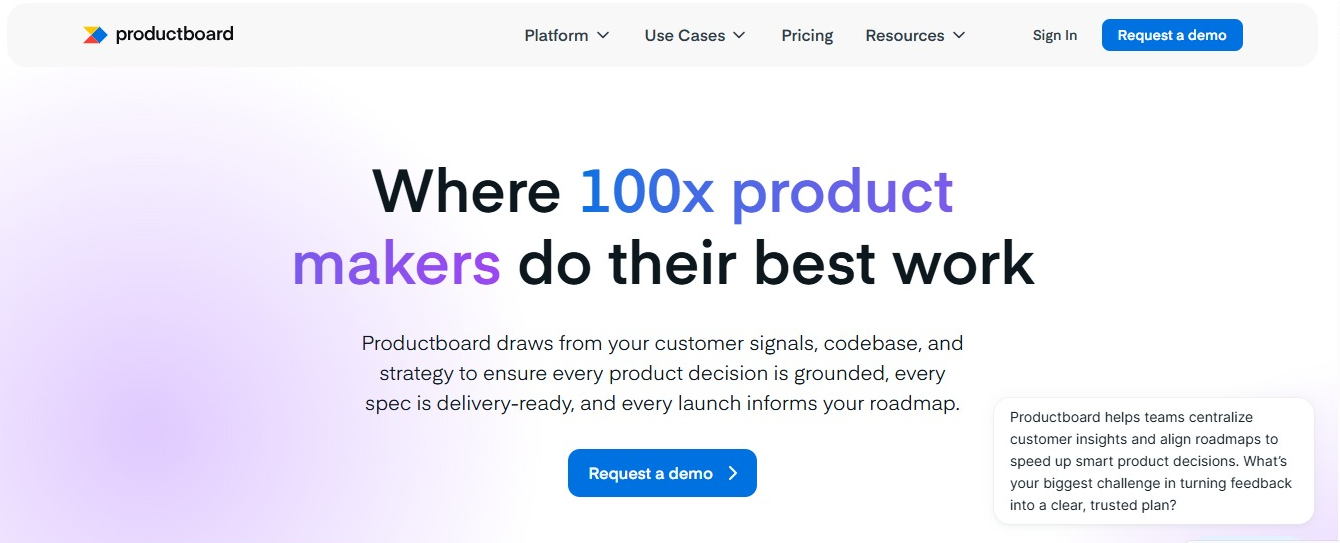
Productboard is built for teams that want every roadmap decision to trace back to something customers asked for. Each piece of feedback gets linked to a feature idea. When you're deciding what to prioritize on the roadmap, you can see exactly which requests are behind each idea. It works best when you already have a steady flow of feedback coming in, since that's what the tool runs on.
- Starting price: free plan; paid plans from $19 per maker per month on Plus, billed annually
- Standout feature: a customer portal on every plan, including Free
- Best for: teams that want customer evidence behind every roadmap call
- Integrations: Jira, Azure DevOps, Slack, Zendesk (Salesforce on Enterprise only)
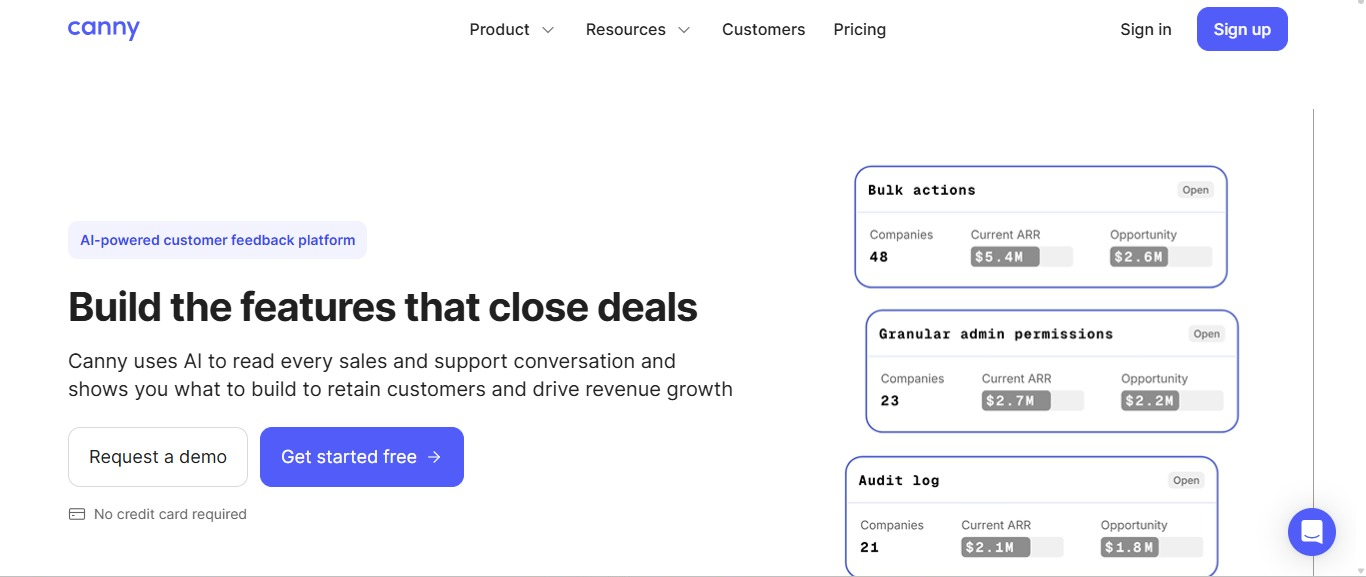
Canny gives your customers a board where they post feature requests and vote on the ones they want. A public roadmap shows them what's planned and what's released. The free plan covers up to 25 tracked users (customers who post, vote, or comment), which is enough to run a public roadmap with an early group of customers.
- Starting price: free for up to 25 tracked users; Pro from $79 a month billed annually, for up to 100 tracked users
- Standout feature: public roadmap and feature voting, built for customer communication
- Best for: lean SaaS teams that want a customer-facing roadmap live fast
- Integrations: Slack, Intercom, and Zendesk on Free; Jira, Linear, and GitHub on Pro
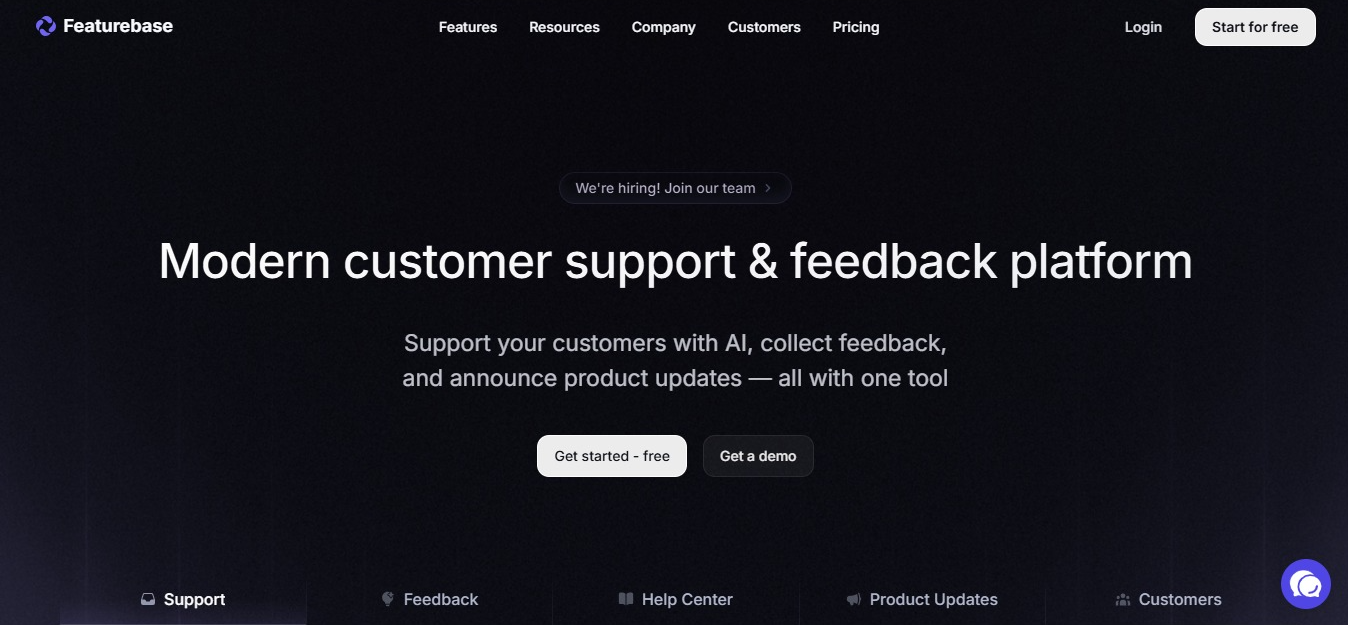
Featurebase puts feedback boards, a changelog, and a roadmap in one customer-facing portal. You can collect a request, move it onto the roadmap, and announce it when it's released, all in the same tool. Only the teammates who manage Featurebase need a paid seat. Your customers can use it for free no matter how many of them there are, which makes it a good fit if you have a small team but lots of customers giving feedback.
- Starting price: free plan with one seat; paid plans from $29 per seat per month, billed annually
- Standout feature: feedback boards, changelog, and roadmap in one portal
- Best for: early-stage SaaS teams that want one tool for the whole feedback loop
- AI features: flags duplicate requests and sorts incoming feedback automatically on paid plans
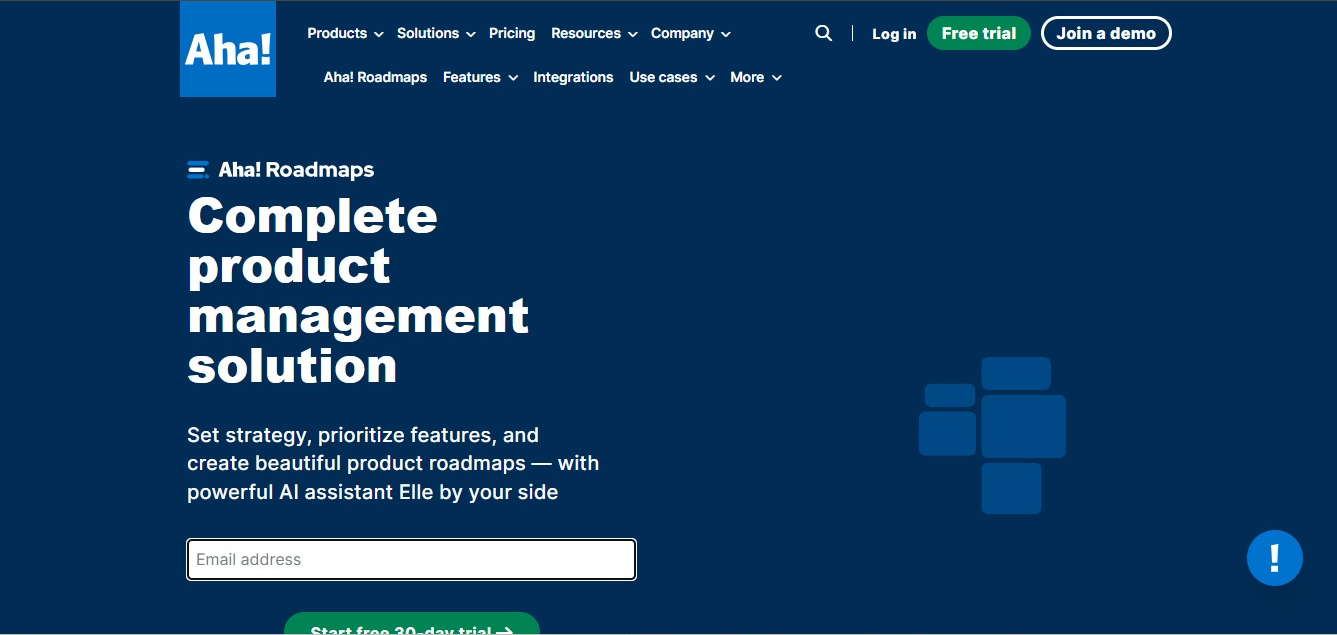
Aha! Roadmaps is one of the most structured tools on this list. It ties every feature back to a company goal, and release plans can sync to Jira or Azure DevOps so the roadmap and the engineering work stay linked. That structure takes time to set up, and you pay for everything that comes with it.
- Starting price: $59 per user per month on Premium, billed annually
- What's bundled: Ideas Essentials, Whiteboards Essentials, and Knowledge Essentials
- Standout feature: a prioritization scorecard for ranking features against your strategy
- Best for: larger product organizations with formal planning processes that want a full system of record
- Keep in mind: premium price and a longer setup time
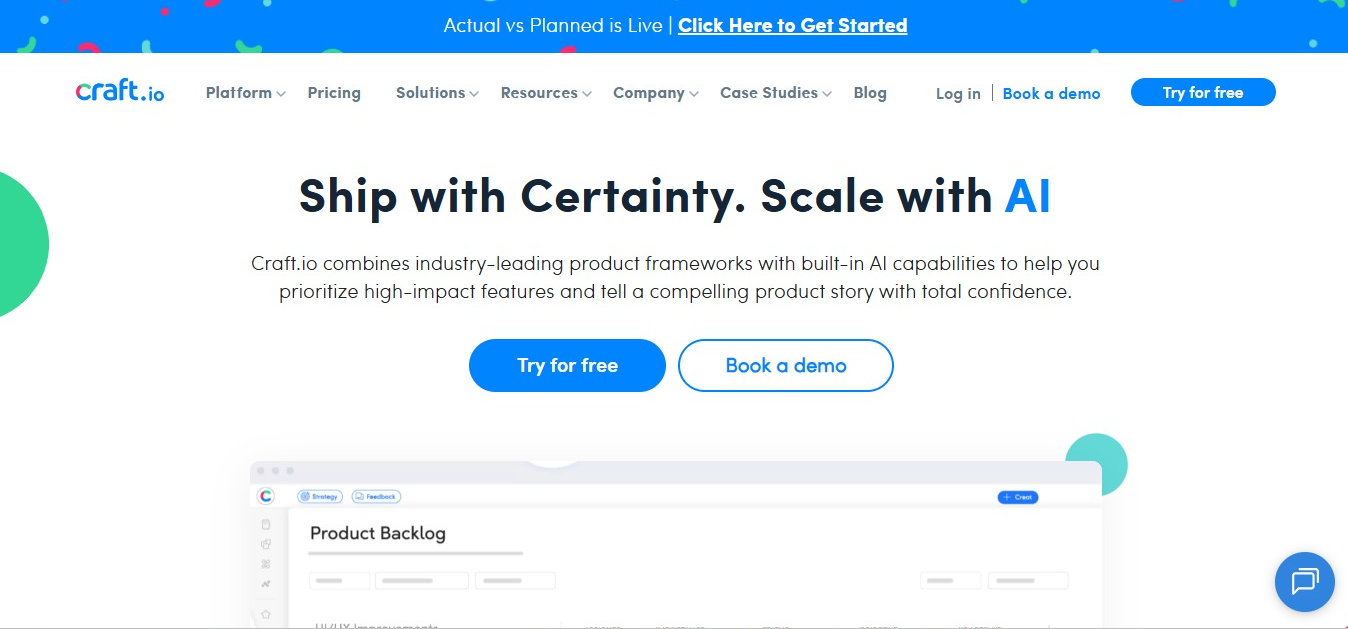
Craft.io gives you roadmaps and a prioritized backlog (a ranked list of features waiting to be built), with workflows you can adjust as your process changes. You get more structure than a plain board, but you're not locked into one fixed way of working. Only editors need a paid seat, and contributors and viewers are free.
- Starting price: $19 per editor per month, billed annually
- Standout feature: two-way sync with Jira and Azure DevOps, even on Starter
- Best for: teams that want structure without locking into one fixed methodology
- Keep in mind: OKR management is a paid add-on on Pro and above
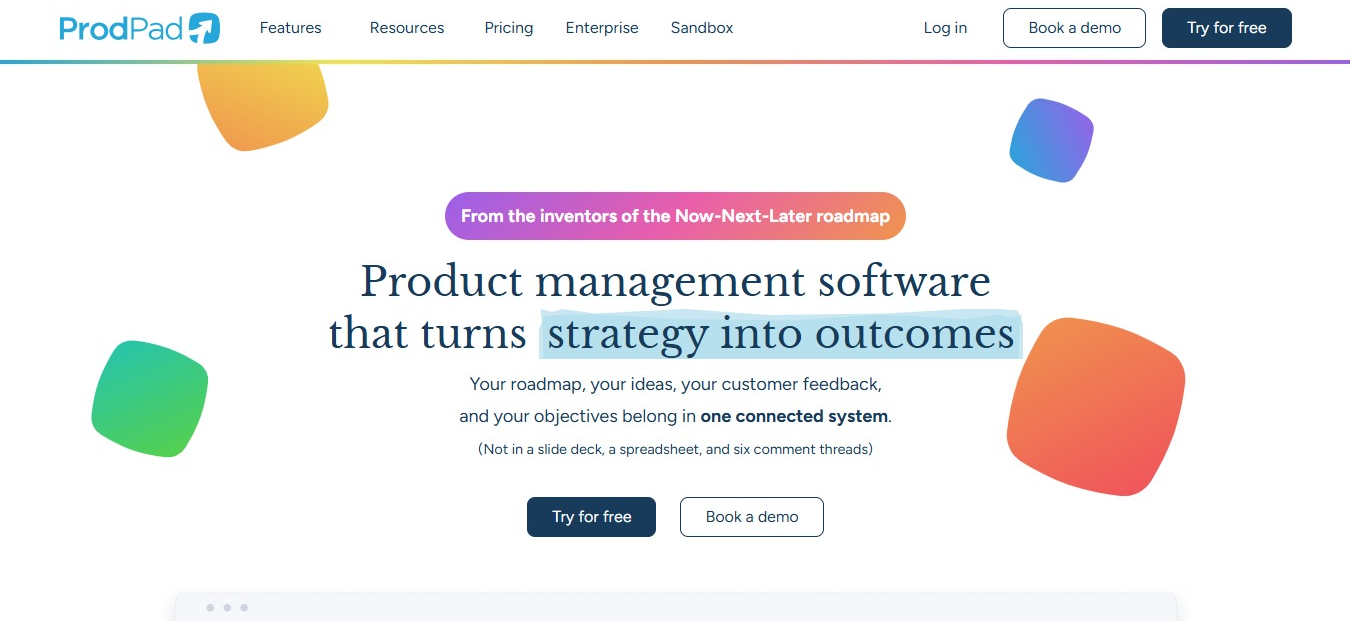
ProdPad's roadmaps use the Now/Next/Later format, which the company's co-founder created. If you have more than one product, the Advanced tier lets you group all their roadmaps into one portfolio. You can then set goals for the whole portfolio, or for each product on its own. ProdPad also sells its tools separately, so you can start with just roadmaps and add idea or feedback tools later if you need them.
- Starting price: $24 per editor per month for Roadmaps Essentials, billed annually; portfolio and OKR management are in Roadmaps Advanced at $44. The Ideas and Feedback modules also start at $24.
- Standout feature: Now/Next/Later roadmaps with portfolio and OKR management across products
- Best for: teams managing more than one product line
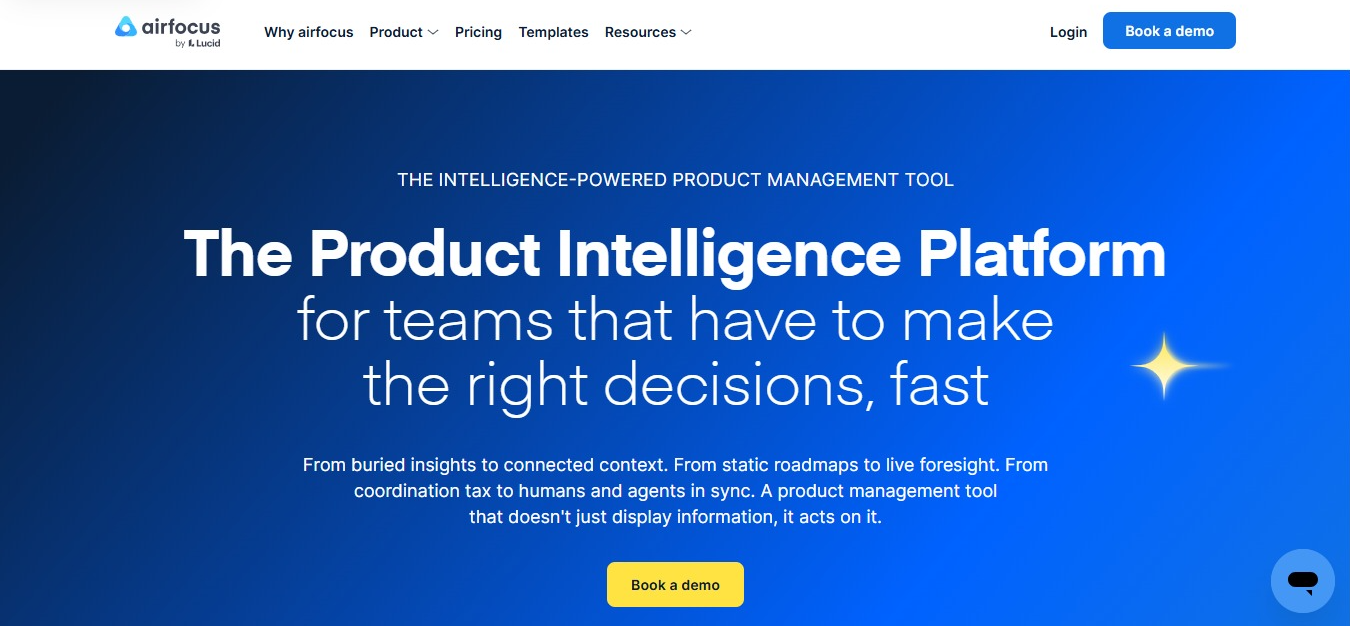
Airfocus (now airfocus by Lucid) is a modular platform, so you set it up around the way your team already works instead of adopting someone else's process.
- Starting price: custom quote (Professional and Enterprise plans)
- Free trial: no self-serve trial
- Standout feature: custom prioritization scoring you build yourself
- Best for: teams that want flexible prioritization on their own terms
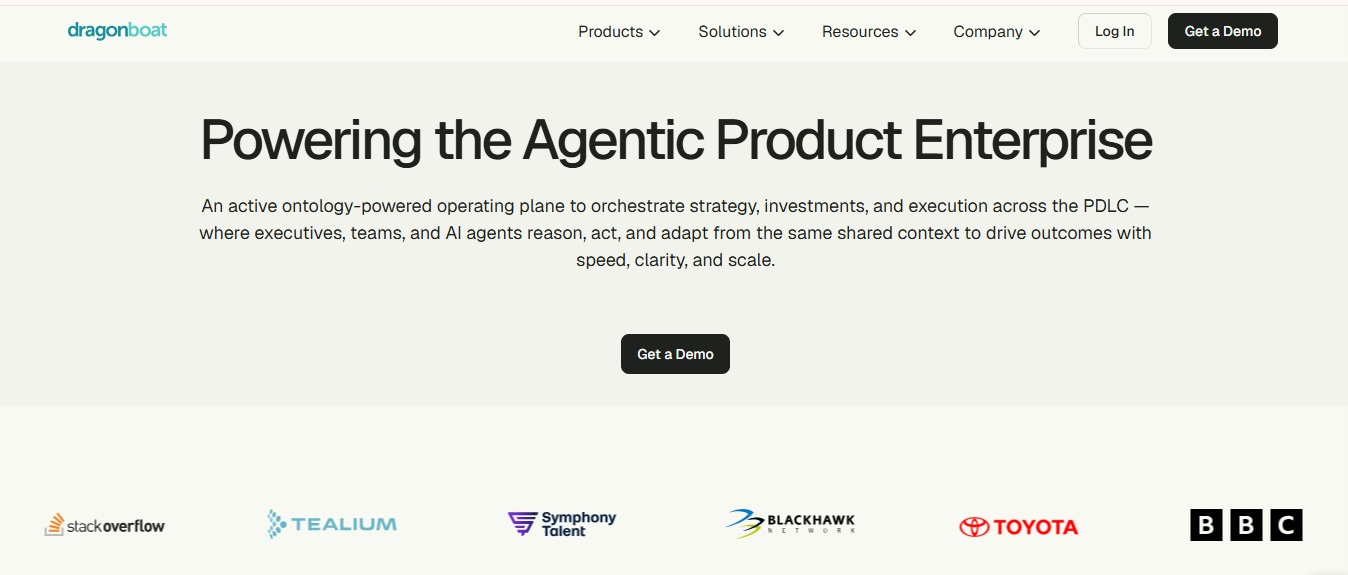
Dragonboat is built for companies with more than one product. Across every product, it links each company goal to the specific initiatives meant to reach it. Once that work is finished, Dragonboat checks whether it delivered the result you expected.
- Starting price: custom quote, not publicly listed
- Standout feature: a strategy canvas that connects strategies to the metrics behind them
- Best for: multi-product organizations connecting strategy to execution
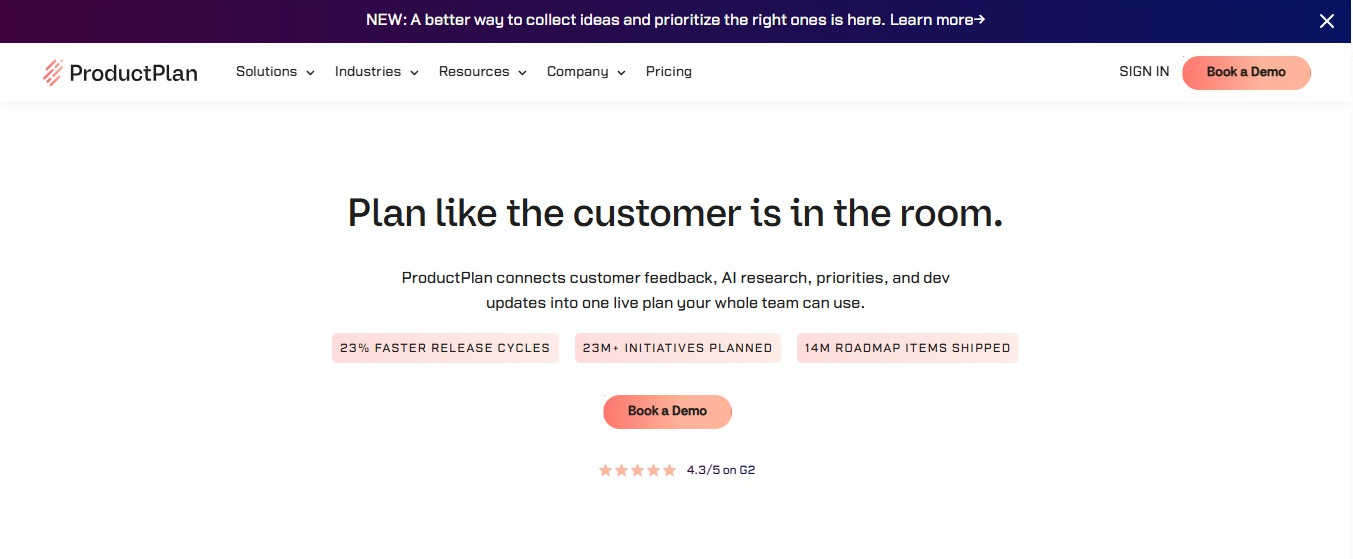
ProductPlan is built for showing your roadmap to people outside the product team, like leadership. Its roadmap views are made to look good in a meeting, so you can share them directly instead of rebuilding the roadmap in a slide deck. Anyone who just views the roadmap doesn't need a paid seat.
- Starting price: custom quote, with one plan that includes every feature
- Standout feature: roadmap views made for presenting
- Best for: teams whose roadmap needs to land with leadership and other stakeholders outside product
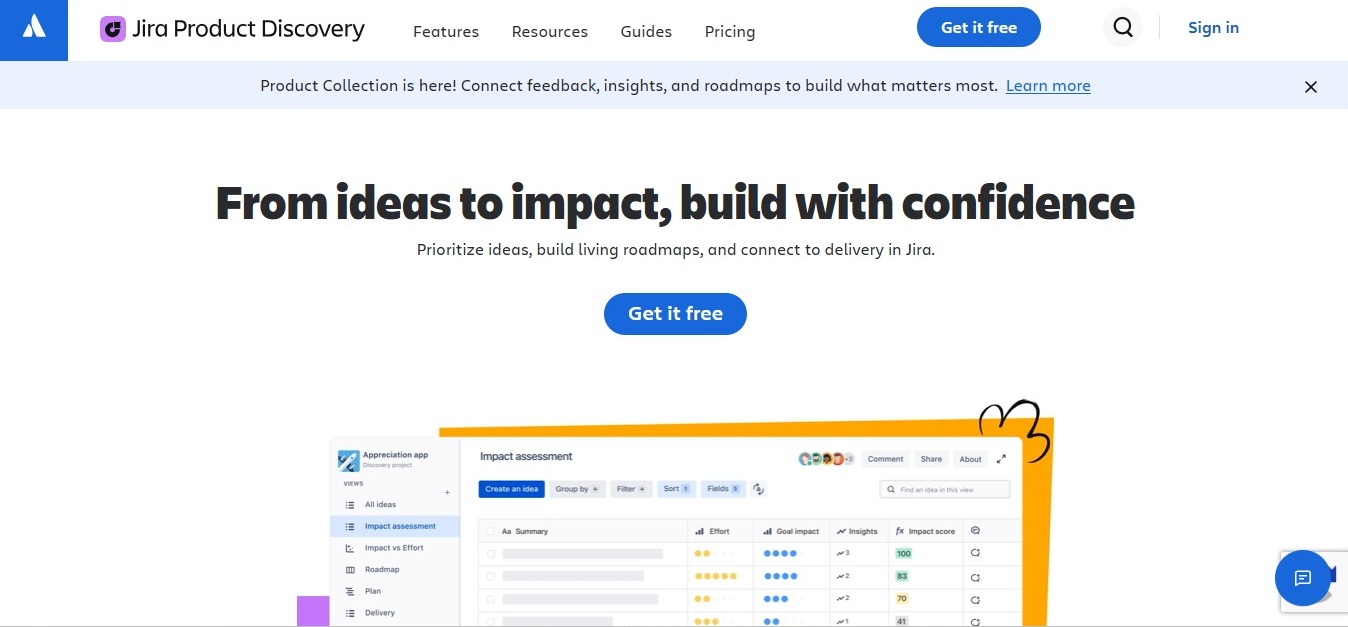
If your engineers already work in Jira, Jira Product Discovery keeps your ideas, priorities, and roadmap right next to the delivery work. Each roadmap item links directly to the Jira ticket that builds it, so you only have to update one place to keep the status current. On the paid Standard plan, you can share a read-only version of the roadmap with customers, but there's no portal where they can post ideas or vote on requests.
- Starting price: free for up to 3 creators, with unlimited free contributors; Standard from $10 per creator per month
- Standout feature: native to Jira, so roadmap items connect straight to delivery
- Best for: teams already working in Jira day to day
- Keep in mind: sharing views outside your company needs the Standard plan, and a site admin has to switch it on
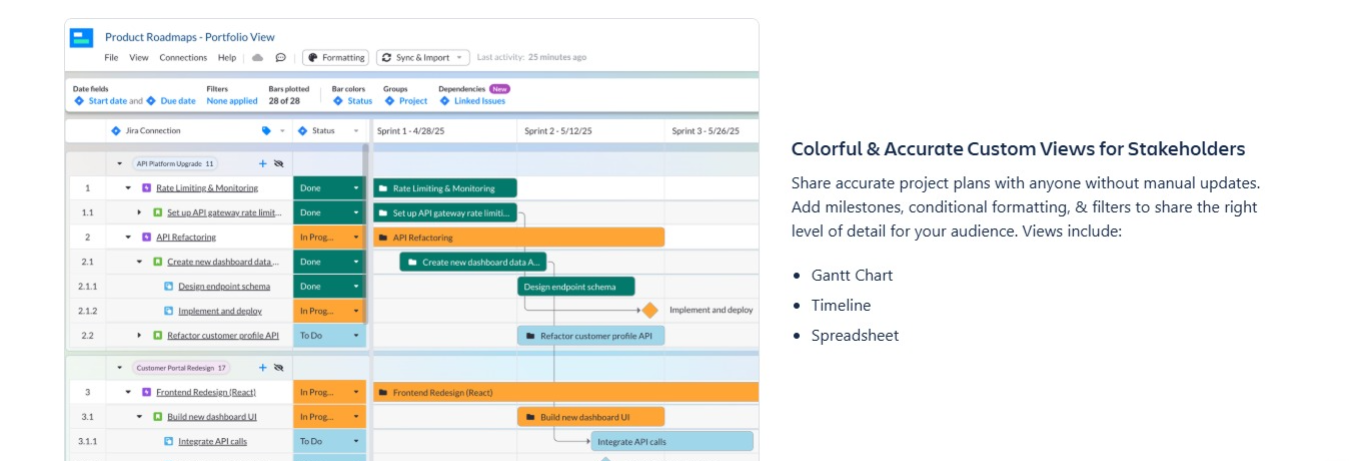
Visor looks more like a spreadsheet with a Gantt chart than a typical roadmap board. It syncs both ways with Jira and Salesforce, and when you make a change in Visor, that change also updates there too. Every plan, including Free, lets you share the roadmap with unlimited view-only users. From that roadmap, stakeholders can click down into individual issues without leaving the page.
- Starting price: free for up to 250 records; $18 a month for one user on Starter, or $24 per user on Team (three-user minimum)
- Standout feature: spreadsheet and Gantt views with two-way sync to Jira and Salesforce
- Best for: teams that need engineering-level detail in the same view as the roadmap
Roadmunk is now called Strategic Roadmaps by Tempo. If you search for the old name, you'll still end up on Tempo's site. The tool lets you build several roadmap views from the same underlying data, so engineering, leadership, and sales can each see the version that makes sense to them, without you having to keep three separate roadmaps updated by hand.
- Starting price: $19 per editor per month, billed annually
- Standout feature: several roadmap views built from one dataset
- Best for: teams that present the same roadmap to very different audiences
If you're still comparing a few of these against each other, go back to the five points earlier: how the tool prices, what the free plan covers, whether customers need to see the roadmap, how deep the integrations go, and which view style fits how your team works. Those five usually narrow twelve options down to what you really need.
Frequently Asked Questions
- What's the difference between a roadmap tool and a project management tool?
A roadmap tool shows the plan and its priorities, meaning what you're building and in what order. A project management tool tracks the day-to-day tasks that get that work done. You can use both, with the roadmap feeding work into the project tool as items move to Now.
- Are free product roadmap tools good enough for a SaaS team?
For a small team, they can be. Productboard and Featurebase both have free plans. Canny is free for up to 25 tracked users, Jira Product Discovery for up to 3 creators, and Visor for up to 250 records. Once you grow past those limits, you'll need a paid plan.
- Can I use a spreadsheet as a product roadmap?
You can. A spreadsheet works fine until you need to collect customer feedback against roadmap items or give other teams their own view of the plan. When keeping it updated starts eating into your week, that's usually the signal to move to a dedicated tool.
- How do I share a product roadmap with customers without promising too much?
Share themes and status instead of dates. Group items as Now, Next, and Later, or as planned, in progress, and released. Keep release dates and internal notes off the public view. That way customers can see where things are heading without holding you to a date that might move.
- What's the difference between a product roadmap and a backlog?
A backlog is the full list of candidate work, from rough ideas to tickets that are ready to build. A roadmap is the higher-level plan that shows which of those things the team has committed to and in what order.
- Can a roadmap tool replace a documentation tool?
Not usually. A few roadmap tools include a light knowledge base or notes module, but they're built for planning, not for long specs, research write-ups, or decision records. A common setup is to keep those pages in a wiki like Docmost and link to them from each roadmap item, so the reasoning is one click away.
- How much does a product roadmap tool cost?
It depends on the pricing model. For a five-person product team on annual billing, Productboard Plus and Craft.io Starter both come to about $95 a month, Visor's Team plan to about $120, and Aha! Roadmaps to $295. Canny prices by customer activity instead of team size, so it stays free until more than 25 customers post, vote, or comment. airfocus, ProductPlan, and Dragonboat quote on request.
Keep your product specs and decisions in Docmost
Whichever roadmap tool you pick, the specs and decision records behind it need a home. Docmost is a collaborative wiki where your product team can write and edit those pages together in real time, and every roadmap item can link to the page that explains it.
Contact sales to see how Docmost fits alongside your roadmap tool.